Chapters
Art Speaks Our Feelings
There are wounds that resist words. Some emotions swell too large for a sentence. Some memories fragment before they reach your mouth. For many of us, recovery begins before conversation does. It begins with color, with movement, with form.
Recovery through art means creating something true. Beautiful is optional. Professional is beside the point. Whether you’re sketching on the back of a receipt, sculpting from scraps, or wrapping yarn around wire, creative expression lets you say what the voice cannot.
Carl Jung once wrote, “Often the hands will solve a mystery that the intellect has struggled with in vain.” That is the essence of art as a recovery tool: it bypasses logic, invites the subconscious, and gives shape to the unspeakable.
In this guide, we’ll explore how art supports emotional processing, builds capacity for personal growth, and offers a deeply human alternative to polished narratives and rehearsed recovery. Whether you’re a seasoned artist or you haven’t picked up a pencil in years, you’ll learn how the act of making can also be an act of mending.
Using art for recovery doesn’t always happen in a therapist’s office. Sometimes it happens on the floor at 2 a.m. with broken crayons and too many feelings. Sometimes it happens in session, with a licensed professional guiding you toward buried memories. Other times it happens in the silence of your own space, with glue-streaked fingers and a sense that what you’re creating understands you better than words ever could.
“Creating artwork allows your mind to be in a safe place while it contemplates tougher issues.”
George E. Miller
What Does “Recovering Through Art” Really Mean?
Art as a tool for recovery takes many forms. At its core, it means using creative expression to access, process, and move through emotional pain. Recovery through creativity wears different faces, though, and it helps to know them apart.
Here is how the main approaches differ:
Art Therapy
Clinical Use
Art therapy is a formal, evidence-based mental health practice led by credentialed professionals. It blends active art-making with psychotherapy, allowing people to explore feelings, process trauma, and build emotional regulation skills. The American Art Therapy Association defines it as a practice rooted in psychological theory, the human experience, and the creative process—all held within a therapeutic relationship.
Art therapists are trained to interpret artwork and to hold space for what emerges. They help clients decode symbols, track themes, and use image-making as a safe entry point to difficult material.
This is intentional, guided work with a trained witness in the room.
Therapeutic Art Practices
Non-Clinical, Self-Led
You don’t need a therapist to feel the power of art.
Therapeutic art is any self-directed creative activity done with the intention, or the side effect, of emotional release, insight, or regulation. That includes doodling through anxiety, building a collage during grief, or painting after a hard day because your mind won’t leave work.
It works like journaling: personal, private, and powerful, even without a professional present.
This practice invites you to listen to yourself without judgment. Willingness matters here. Skill does not. For anyone who can’t yet speak about her emotions or trauma, it is often the first safe step.
Expressive Arts
Multimodal Exploration
Sometimes recovery refuses to stay in one form.
Expressive arts integrate multiple creative outlets: movement, sound, visual art, drama, poetry. They give emotion more than one way out. The practice means following the energy of a feeling and letting it shift mediums until it has been witnessed.
This approach is especially helpful if you don’t think in words or pictures alone, or if you experience aphantasia. It welcomes dance, rhythm, gesture, voice, and any creative expression you feel like using.
Whether through structured art therapy, spontaneous sketching, or full-body expressive rituals, the outcome is the same: you get to see, hold, and transform what once overwhelmed you.
Recovery through art means using creation to meet yourself: fully, honestly, and with the courage to keep going.
The goal of art therapy was never the art. The goal is reclaiming the parts of you that had to go quiet. The art is the container that holds the truth.
Why Art Helps Recovery When Nothing Else Works
The Body Remembers—But So Does the Canvas
Some wounds live deeper than words. They settle into the body: clenched jaws, restless hands, pounding hearts. Trauma doesn’t ask permission to linger. It roots itself in the nervous system, in the places talk therapy sometimes struggles to reach.
That’s where art comes in.
When you create from emotion, you bypass the brain’s filters. You move through sensation instead of story. You engage the part of the psyche that remembers through color, shape, and rhythm. Clay, paint, fabric, ink: each one gives you a place to externalize what was once locked inside.
Art for emotional recovery is physical. The hand moves, the breath steadies, and the body starts to feel a little safer.
What you can’t say, you can sculpt. What you can’t feel safely, you can pour onto the page.
In those moments, expressing emotional wounds with creativity becomes possible. Then it becomes inevitable.
Art Creates a Safe Space for Emotional Release
Talk therapy can feel like confrontation. Eye contact. Words. The risk of being misunderstood. Artistic emotional exploration offers a back door: a quiet, nonverbal route to expression.
A piece of art doesn’t interrupt. It doesn’t correct. It doesn’t ask follow-up questions. It simply holds what you give it.
That’s why art feels safer for so many people. It is a form of emotional containment: your fear, grief, rage, or confusion now lives there, in the lines and layers, instead of only inside you. The act of creating builds just enough distance to breathe.
Art lowers defenses. Symbol replaces statement. Movement replaces explanation. And still, somehow, it says more than words ever could.
Symbols Speak Louder Than Logic
We recover through narrative. We also recover through metaphor, and metaphor is where art excels.
- A smear of black across the canvas can represent everything you couldn’t scream.
- A tightly wrapped sculpture can echo the part of you that still feels bound.
- A burst of color might reflect the joy you’re almost afraid to feel again.
Those marks are survival strategies. Symbols give you access to truths your conscious mind may say it is not ready to face.
And when those truths are witnessed, even by you alone, recovery begins.
The Power of Play, Flow, and Distraction
Sometimes the most profound relief comes from stepping away from the pain rather than digging into it. Art offers that chance, too.
In the middle of blending colors or layering paper, you might find yourself smiling. Curious. Present. Maybe even calm. These moments are resets, and your nervous system counts every one of them.
Psychologists call this the flow state: a mental space where you’re so immersed in creation that your usual stressors fade to the background. Your nervous system settles. Your mind unclenches. In a world of hypervigilance and overwhelm, that kind of focus is a rare mercy.
Over time, these moments of safety accumulate. And the brain, ever adaptable, begins to trust that peace is possible.
Why Art Works When Nothing Else Does
Because it doesn’t demand. Because it doesn’t judge.
Art gives what hurts a form, so you can finally see it, hold it, and decide what to do with it. That is the difference.
That’s the opening.
The Science Behind Art Therapy and Emotional Processing
Why does making art feel like relief—even when you don’t know why?
Because your subconscious mind and body already understand the language of creativity, even if your conscious mind doesn’t.
Modern neuroscience is catching up to what artists and trauma survivors have always known: art therapy works because it activates the parts of us that words can’t always reach.
Art Is a Whole-Brain Experience
When you make art, your brain lights up across many regions at once. The emotional centers, the sensory-motor system, the memory hubs, the visual cortex, and the areas linked to reward and motivation all become active. This wide neural activation helps re-integrate parts of the brain that trauma or depression can fragment.
From a neuroplasticity perspective, each act of creation forges new pathways. Each brushstroke and torn paper edge reinforces your brain’s ability to reorganize toward calm, connection, and coherence.
Art becomes a form of emotional catharsis because the act of making restructures your inner experience at the level of the nervous system itself.
Stress Relief Without Words
One of the most immediate benefits of art therapy is physiological. In a widely cited study, 45 minutes of art-making lowered cortisol levels in 75% of participants, regardless of artistic skill or experience.
That is a biological shift, measurable in the blood.
Creative activity engages the parasympathetic nervous system, signaling your body that it’s safe to rest and digest. Much like meditation or deep breathing, art can induce a relaxation response and calm an overactive stress system.
And because art doesn’t require verbal explanation, it bypasses cognitive resistance. You don’t need to tell the story to feel the release.
Why Non-Verbal Techniques Matter
Talk therapy relies on narrative. But not all trauma can be told.
Visual arts therapy offers an alternative: sensation over explanation, movement over monologue. In integrative art therapy, the goal is integration, and insight follows.
Non-verbal creative techniques let people feel their way through emotion without first translating it into language. That matters deeply for anyone whose trauma lives in silence, secrecy, or sensory overwhelm.
In many clinical settings, art becomes the bridge between nervous system regulation and psychological insight. While drawing, painting, or sculpting, people often reach memories and emotions that verbal therapies struggle to surface.
The Role of the Body: Somatic Recovery Through Art
Trauma is stored as much as it is remembered. It lives in muscle tension, in shallow breathing, in the reflex to shut down or flee.
Art helps bring the body back online.
- The texture of clay awakens touch.
- The movement of a brush restores rhythm.
- Repetitive gestures soothe the nervous system.
- Intuitive image-making invites enteroception, the ability to sense what’s happening inside your body.
These sensations root you in the present moment. They reconnect your physical self to your emotional self. And in that reconnection, recovery begins.
Art Therapy Is a Recovery Method. The Research Agrees.
The evidence keeps stacking up:
- Measurable stress relief through reduced cortisol
- Dopamine activation to enhance mood and motivation
- Increased functional connectivity in the brain
- Mirror neuron stimulation fostering empathy and understanding
- Physical grounding through sensory and motor engagement
In other words, art therapy for mental health works across brain, body, and psyche. The relief is real, and it is measurable.
Practical Ways to Use Art as a Recovery Tool
One of the most powerful things about recovery through art is that you don’t need training to begin. These therapeutic art practices are accessible, adaptable, and deeply personal. They let you engage with your emotions without explaining them, and often without even naming them.
Below are specific methods you can use to begin your own creative recovery practice. Each one has been used in expressive arts therapy, creative journaling, and trauma-informed workshops to promote release, clarity, and inner stability.
“Art is a guarantee of sanity.”
Louise Bourgeois
✦ Drawing & Doodling Exercises
Let the Unconscious Lead
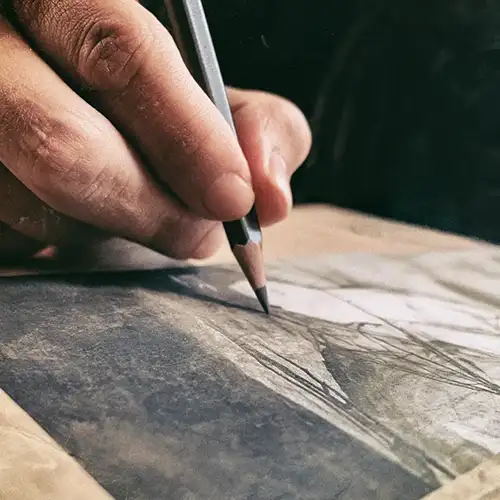
Sometimes your hand knows what you’re feeling before your mind does. Drawing and doodling carry those messages to the surface.
Try:
Spontaneous doodling: Let your hand scribble whatever it wants—lines, loops, symbols—without judgment.
Non-dominant hand drawing: Forces your brain out of autopilot and allows deeper feelings to surface.
Symbol sketching: Choose an emotion and represent it as a shape, creature, or abstract design.
These techniques reduce overthinking and invite emotional honesty. Studies show that repetitive drawing, like zentangles or mandalas, can lower anxiety and improve memory and focus. Even 20 minutes of coloring can reduce cortisol and improve mood.
This is a powerful entry point when your emotions feel murky, shapeless, or just too much.
✦ Visual Journaling
Map Your Inner Landscape
Instead of writing how you feel, draw it.
Visual journaling is a fusion of sketching, painting, collage, and color that replaces sentences with shapes and symbols. You might:
- Draw how your body feels today using abstract lines.
- Create a mood mandala using repeated symbols.
- Layer paint over magazine clippings to express confusion or hope.
Carl Jung kept his own visual journal of mandalas, believing the circle to be a reflection of the inner self.
Modern trauma therapy continues this work: studies show that visual journaling helps regulate emotional states, track recovery patterns, and process unresolved experiences.
Try making it a daily or weekly practice. Over time, your journal becomes a mirror. It reflects your emotions, and it documents your growing capacity.

✦ Collage & Mixed Media
Make Meaning from Fragments
Collage works especially well if blank pages block you or drawing makes you anxious. By selecting and arranging existing images and text, you sidestep the pressure to create from scratch and simply respond to what pulls your attention.
Use it to:
- Create a visual “weather report” of your current emotional state.
- Tell a story about your past, present, or future self without using a single word.
- Build a vision board—not just of goals, but of who you want to become.
The act of arranging disconnected elements into a coherent whole mirrors what trauma recovery often feels like: piecing your life back together, fragment by fragment.
Bonus: the tactile work of ripping, gluing, and layering engages your senses and can settle anxiety through rhythmic movement.
✦ Abstract Painting
Process Without Explaining
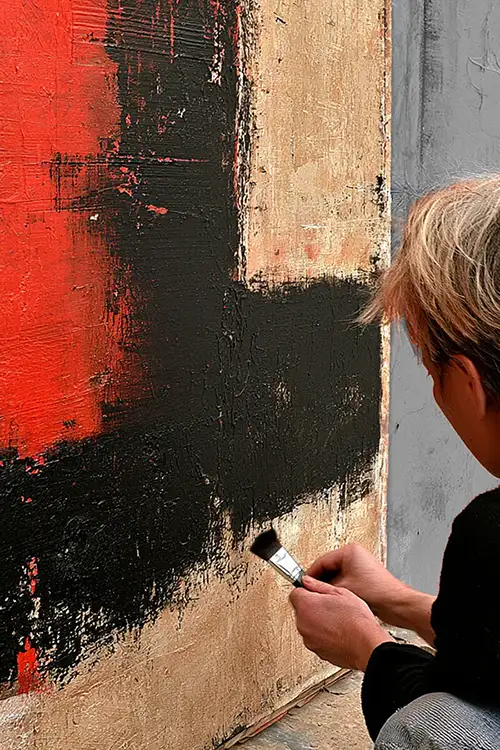
Painting is a full-body, emotional experience, especially when you let go of rules and paint intuitively.
Begin with how you feel. Choose colors that match the emotion. Let your brush, your fingers, or a palette knife move in whatever direction feels right. Don’t try to make an image. Let sensation guide form.
Use:
- Watercolor for surrender and unpredictability. Let the paint move on its own.
- Acrylics or oils for layering, scraping, and transforming. You can paint over what no longer serves.
- Finger painting to engage touch and reconnect with the body.
Painting this way mirrors emotional recovery: chaotic, layered, nonlinear, and cathartic all the same. Even setting up the space, lighting a candle, or playing music can build a small ritual around the act of release.
✦ Sculpting with Clay or Found Objects
Recovery Through Touch
When your body holds trauma, working with your hands can bring you back to yourself.
Clay is especially powerful. You can press, squeeze, shape, or destroy it. The texture grounds you. The repetition soothes the nervous system. And because it’s three-dimensional, sculpting offers new perspectives, literally.
You might:
- Shape an emotion or fear into a physical form, then reshape or dissolve it
- Build a protective figure to symbolize your strength.
- Use foil, fabric, sticks, or household scraps if you don’t have clay.
Art therapists use clay for somatic recovery work because it moves emotion through the body without requiring a single word of explanation. It can surface preverbal memories, calm hyperarousal, and rebuild the brain-body connection.
Let the Practice Be Messy. Let It Be Yours.
Each of these methods is a doorway. It leads to honesty, and honesty is the only requirement.
Recovery with art runs on truth. Talent is optional equipment. Let the color spill. Let the lines wobble.
If strong emotions rise, breathe. Something important is surfacing. Write about it if you want. Reflect. Or walk away and come back later. This is a conversation with yourself, and it moves at your pace.
For more hands-on exercises, symbol-based rituals, and guided practices, explore the Art Exercises for Mental Health and Inner Work collection.
Creativity as a Path to Personal Growth and Empowerment
Creative expression soothes pain, and then it goes further: it sparks transformation. When we make art, we reassemble ourselves. Every brushstroke and sculpted line becomes part of an artistic practice of self-growth. What we express matters. How the process reorients our relationship with trust, identity, and resilience matters more.
Art builds self-trust through decision-making. Even choosing a color becomes an affirmation of intuitive knowing. In one study, 73% of participants experienced a measurable boost in self-efficacy, confidence in handling life’s challenges, after a single 45-minute art session. Over time, this trust in creative choices spills over into life: we grow more confident setting boundaries, speaking truths, or making changes.
I experienced this for the first time in high school. One day I saw a pregnant woman in the wood grain of a classroom door. I painted her, and she looked furious. Why? It took time, but I realized: my mother wanted another child with her new husband, and I was the angry one. That painting gave form to something I didn’t yet have words for. Creativity revealed the truth before I could speak it, and that clarity gave me peace. That is the kind of unspoken transformation art can offer.
Friends report similar breakthroughs.One woman, healing from years of emotional neglect, created a small clay figure of a bird with clipped wings. At first, she hated it. When I asked why she kept returning to it, she whispered, “Because it’s me, and I’m trying to fix her.” That moment became a pivot: she began sculpting birds with stronger wings, then birds in flight. Her artistic process mapped directly to her emotional growth. The final product never mattered. Watching herself change did.
Another friend, a military veteran living with PTSD, struggled to express himself and had built walls between himself and his loved ones. With some coaxing, he began drawing abstract war zones: scorched reds, tangled black wires, cracked soil. Over time, human forms appeared. First shadows. Then faces. Then himself. He said, “It was like my hand knew before I did. I’m still here. And I matter.” He began speaking more openly about survivors’ guilt and the trauma he carried. He eventually reconnected with his family, differently, but well. His story shows where emotional release comes from: making space for complexity and trusting what emerges.
Creative expression also builds emotional resilience. When we sit with discomfort and keep creating anyway, we practice tolerating frustration and uncertainty, skills essential for recovering from hard things. Cathy Malchiodi, art therapist and researcher, frames art as a practice of resilience and self-actualization rather than a record of pathology. Creativity is catharsis, and it is also a muscle. We build it to adapt and keep going.
Programs like Our Resilience use art to help people literally draw their power. Survivors sketch themselves as superheroes or create shields covered in personal symbols. These aren’t just crafts—they’re visual affirmations of strength.
And the effect ripples: people begin to embody those images. They become the superhero. They become the force that protected them. You can see similar themes in Your Inner Healer Has Something to Show You, where creativity is used to reconnect with internal guidance.
Making art also nurtures meaning. People rediscover parts of themselves they thought were lost: a childhood love of color, a suppressed talent for writing, a voice that was never safe to use. These rediscoveries affirm that growth is often a return to someone true. She was there all along. Creative breakthroughs bring psychological shifts with them: from helpless to capable, from forgotten to found.
Ultimately, art empowers us to become authors of our lives. Each creation reframes a piece of our story. Where trauma silences, art speaks. Where depression flattens, art gives shape.
Through creativity, we stop being passive recipients of pain and start actively shaping who we are and who we’re becoming. The shift is neurological and behavioral as well as emotional. As the American Art Therapy Association reports, art therapy reduces anxiety and increases personal agency by helping people feel “more in control of their own lives.”
And that control is where personal transformation begins. You don’t need to be an artist to reach it. You need a surface, a medium, and the willingness to try. Because when you do, you might find, like I did, that what appears in the paint or clay or paper is a mirror. It may show you something you didn’t know you were ready to see.
Who Is Recovery Through Art For?
The power of art was never reserved for the “creative” or the clinically diagnosed. Recovery through art belongs to everyone, with or without brushes, with or without words. Truth is the only requirement, and every person has something worth expressing.
I might not say this enough: you do not need to be an artist to benefit from creative recovery. Whether you’re working through trauma, dealing with daily stress, or seeking a deeper understanding of yourself, artistic expression for personal development is both accessible and effective.
Here are just a few of the many groups who find strength, clarity, and breakthroughs in creative work.
✦ Trauma Survivors: Reclaiming the Story
Trauma can make words feel dangerous or inadequate. For survivors of abuse, violence, combat, or natural disasters, traditional talk therapy often feels too direct, too triggering. Art steps in as a safer alternative.
- Why it helps: Art offers a nonverbal language to process pain without re-traumatization. It lets survivors externalize what they’ve endured, putting the memory out there on paper or canvas instead of inside, where it festers.
- Who it helps: Veterans with PTSD painting battlefield memories. Survivors of domestic violence journaling their emotions through color. Refugees drawing the homes they lost and the ones they hope to build.
- The result: A visual narrative that evolves from chaos to coherence. A path toward post-traumatic growth.
Even years after the fact, using the arts for emotional resilience can help survivors reclaim power over what once silenced them.
✦ Individuals Facing Mental Illness Challenges: Relief Without Pressure
Anxiety. Depression. Burnout. OCD. Mood swings. Substance use. Eating disorders. ADHD.
Across the board, therapeutic art is used as both emotional outlet and skill-building process.
- If you live with anxiety: art becomes a ritual, a way to slow racing thoughts and feel present.
- If depression flattens you: color and movement spark dopamine and offer a sense of completion in a world that otherwise feels stuck.
- If you’re managing addiction: an artistic routine helps retrain the brain toward healthier habits of reward.
Studies consistently show that art therapy reduces symptoms of depression, increases self-esteem, and improves mood, even in hospital settings, psychiatric care, and elder care. The medium doesn’t matter. The act of doing, whether drawing, weaving, or coloring, makes the difference.
Art is where mental health support stops being clinical and starts being human.
✦ Neurodivergent Individuals: Expression Without Translation
For those who think and experience the world differently, art can be a lifeline.
- Autistic children might draw scenes to process social confusion or create stories using visual symbols instead of words.
- ADHD teens may find hyperfocus during sculpture or digital illustration, where movement and tactile engagement help regulate restlessness.
- Non-verbal individuals can shape, mold, paint, or build, making their feelings seen without needing to speak.
Art makes space for neurodivergent brilliance. It communicates with difference and celebrates it. Correction was never the point. In inclusive classrooms and therapy spaces, using art to aid recovery is empowering as well as therapeutic.
✦ People Living with Chronic Illness or Pain: Creating Control
When the body becomes a battleground, creativity becomes a sanctuary.
Hospitals now regularly use art therapy with patients facing cancer, chronic illness, autoimmune disorders, or life-limiting diagnoses. No one is promising a cure. The goal is control, dignity, and meaning restored.
- Art reduces stress-induced pain by activating different neural pathways.
- It provides a space where patients can create with their bodies, instead of feeling betrayed by them.
- It gives language to grief, fatigue, and fear—without needing to find the “right” words.
Whether painting during chemotherapy, sculpting between surgeries, or creating legacy art, these acts of expression ground patients in who they are beyond their diagnosis.
✦ Children and Teens: Speaking Without Saying
Kids are natural creators. Before they can form complex sentences, they draw their feelings. And in therapy, that instinct becomes a powerful tool.
- A child who can’t say “I’m scared” might draw a monster under the bed.
- A teen who shuts down in talk therapy might create a collage about identity or sketch tattoo ideas on paper instead of scratching their skin.
In trauma-informed classrooms and behavioral therapy, art helps children process experiences they don’t yet understand. It strengthens self-regulation, social empathy, and self-worth. Group art activities reduce isolation. Sharing stories through drawing or painting builds trust, peer support, and language around emotions.
Art therapy meets young people where they are and guides them toward where they could grow.
✦ Burned-Out Adults, Creative Souls, and the Quietly Curious
You don’t need a diagnosis to feel lost. Or lonely. Or disconnected from yourself.
Art is for the mother who forgot how to play. The writer who hasn’t touched a pen in months. The accountant who can’t explain their grief but keeps dreaming in blue.
You don’t have to know what you’re doing. You just have to begin.
Recovering through art invites you to listen to the part of you that doesn’t speak in words. To discover what hurts, and what waits underneath the hurt. If you’ve never considered yourself “artistic,” this discovery can be radical. If you’ve always created, it deepens the process into something more sacred.
And don’t overlook the power of community. Recovery happens in circles:
- Quilting groups mourning together.
- Veterans painting identity masks in group sessions.
- Online challenges where strangers share their pages and say: I see you.
Even healthcare providers are catching on. Some now “prescribe” museum visits or art classes to patients dealing with stress and isolation. Because the science is clear: art is good medicine.
So, Who Is Recovery Through Art For?
You. All of us.
If you feel, you can recover from the hard parts through art.
Whether you’re recovering, surviving, exploring, or enduring, it counts. You don’t need to be good at art for your art to show you your deepest, most authentic self.
You Don’t Need to Be an Artist to Begin
Again, this isn’t about being “good at art.” This is about being honest—with yourself.
Creative self-expression doesn’t ask for technical skill. It asks for presence. For willingness. For the courage to pick up a pen, a brush, a torn scrap of paper—and see what your hands know that your words don’t.
Art can help you recover because it’s honest. Complicated. Personal. Yours.
There is no wrong way to do this.
If you can:
- Circle an item on your grocery list in crayon
- Rip up a magazine and glue pieces down.
- Smudge charcoal across a page.
Then you can reach the kind of artistic self-discovery that leads to emotional clarity and resilience. You already are someone with stories, tension, questions, and beauty. That’s enough.
Recovering through art is a process. It is a return to self-trust, self-compassion, and self-awareness.
If you’re ready to make that return:
- Try one of the free art rituals on the site—easy, symbolic acts to move emotion through you.
- Visit the shop to see the dolls—made to hold intention and remind you of who you’re becoming.
- Or browse the practical guides to begin your creative recovery at home, on your own terms.
You don’t need permission.
You don’t need training.
You only need to begin.
See the Full Art as Method Collection
Sources:
American Art Therapy Association – What is Art Therapy? (definition and scope of art therapy).
Cumberland Heights (Starla Brown, 2020) – How Art Therapy Helps You Process Emotions (benefits of art therapy: non-confrontational expression, catharsis, who it helps).
Drexel University News (Frank Otto, 2016) – Making Art Reduces Stress Hormones (study showing 75% had lower cortisol after 45 min of art, 73% increased self-efficacy, art improves mood and affect).
Frontiers in Psychology (Christianne Strang, 2024) – Art Therapy and Neuroscience: Evidence, Limits, and Myths (overview of neurobiological mechanisms: neuroplasticity, reward, interoception; creativity linked to synaptic plasticity).
MoMA Magazine (Jackie Armstrong, 2020) – The Healing Power of Art (first-person account of art aiding trauma recovery, inspiration and hope from art, social prescription of art for well-being)
Psychology Today (Cathy Malchiodi, PhD) – Art is About Resilience (resilience through art, “art is a guarantee of sanity,” quality of life improvements).
Psychology Today (Cathy Malchiodi, PhD) – Cool Art Therapy Intervention #2: Active Imagination (Jung’s use of art for inner work and emotional peace).
Psychology Today (Cathy Malchiodi, PhD, 2013) – Top Ten Art Therapy Visual Journaling Prompts (uses of visual journaling for trauma, Jung as “poster person” of art journaling; examples like mandala journal, non-dominant hand drawing).
Small Victories Wellness (Sarah Anacleto, ATR-BC) – Art Therapy: What It Is and Why It’s Good for Our Brains (difference between art therapy and therapeutic art, brain benefits like dopamine release and multi-region engagement).
Trauma Counseling Center of LA (Kate Truitt, 2023) – The Healing Power of Art and Creative Expression in Trauma Recovery (art transcends language, provides a safe outlet for trauma).
Verywell Mind (Kendra Cherry, MSEd, 2024) – What Is Art Therapy? (techniques used, benefits, effectiveness including reduced stress and improved outcomes in studies).
Verywell Mind (Elizabeth Scott, PhD, 2023) – Art Activities for Stress Relief (art as catharsis, studies on coloring reducing anxiety, art as mindfulness and flow).
Whiteflag App (Raney Mills Turner, ATR, 2022) – Art Therapy vs Therapeutic Art-Making (AATA definition of art therapy; neuroscience perspective on art creating new neural pathways and catharsis).