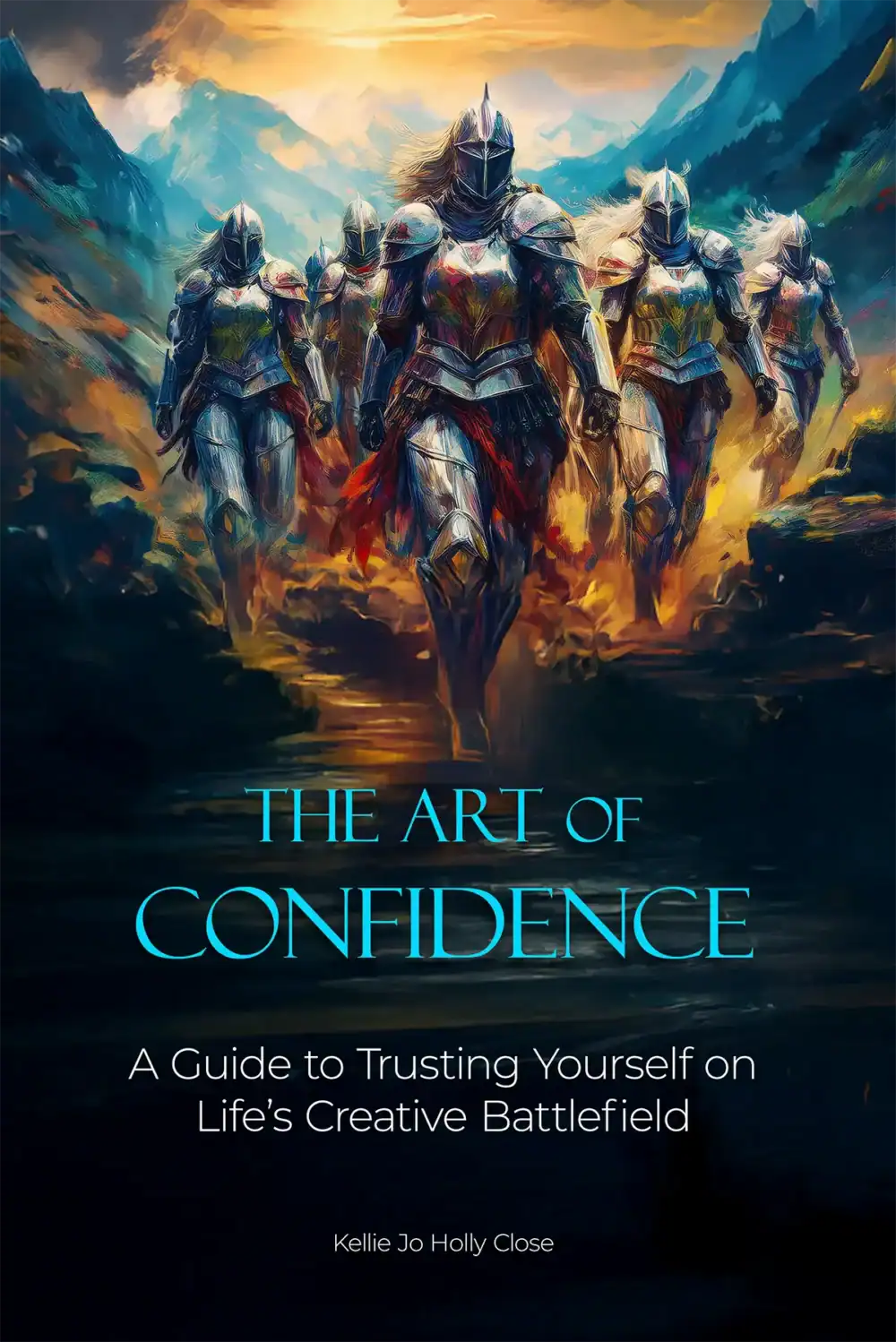
The Art of Confidence: A Guide to Trusting Yourself on Life’s Creative Battlefield






You understand what happened to you.
Your hands still will not move.
You have language for the pattern and you can trace it back to where it started. The sketchbook stays closed anyway.
The Art of Confidence starts in that gap, in the space between what you know and what you will let yourself do. It is a guide you do: 24 art exercises and 61 prompts that build confidence the only way it gets built, by making something.
You do not have to call yourself an artist. You need paper, something that makes a mark, and willingness to make the first one.
Digital download, PDF, roughly 150 pages, sized for standard 8.5×11 paper so you can print the pages you want at home.
Where the Talk Work Stops
You have the room. Or the corner, or the table by the window. You have supplies for almost anything you want to make, and more than you need, because buying them is the part that still feels good.
You went to the store for yarn. You chose it carefully: soft, durable, the right weight in your hand. You could not wait to get home. Then you hung the bag on the doorknob and left it there. Later you moved it to the high shelf and willed yourself to forget it, and that worked.
The room fills up with that. Dried acrylic on the palette. Markers that stopped working two years ago. Bins of yarn. Dust on the worktable you keep meaning to clean. A cabinet of maybes and almost dids. Some days you think the whole room should just be a bedroom.
The words you use on yourself in there are lazy, wasteful, stupid. None of them is what is happening. What is happening is a block between the idea and the hand, and it sits closer to physical than anyone who has not felt it understands.
Here is what waits on the other side of the first mark. Making something means being alive inside it, and being alive inside it opens the door to memory. To the people who are gone. To the questions you do not ask in daylight. Numbness kept you upright and kept that door shut, and your hand knows exactly what the mark costs. So it stays flat on the table.
Talk moves through the mind. Art moves through the hands, the shoulders, the gut. You can name every psychological pattern and trace it back to where it started. That naming was real work and you did it honestly. It never once opened the cabinet.
This guide gives orders. Pick up the nearest thing that makes a mark. Draw one line.
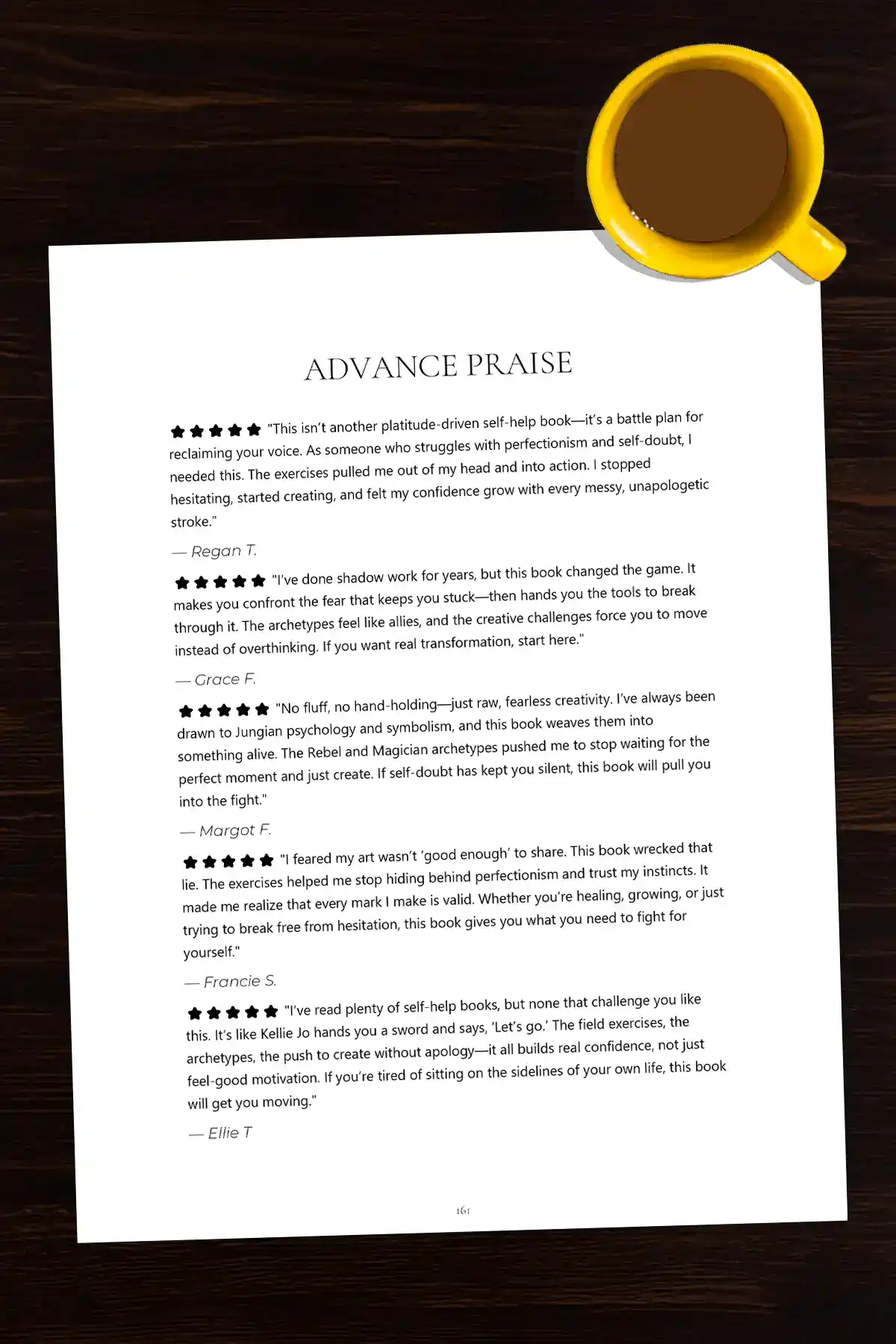
“I’ve been in therapy for four years. I know my trauma. I can name every pattern. And I was still finding ways not to show up. This book doesn’t care that you understand what happened to you. It wants to know what you’re going to do with your hands.”
K.D
Calling yourself an artist is optional. The curiosity is not. Art reaches what logic cannot: the subconscious, the body, the collective patterns that have shaped human experience for centuries. Every line you put down is a decision. Every decision is evidence.
This is a book you do. It asks something of you every time you open it.
The confidence that holds under pressure is built by surviving the doing.
How It Works
The guide works through three forces. Together they form the base from which everything else is built.
Flow
The state where the work takes over
Self-judgment loses its grip and the making happens. Psychologist Mihaly Csikszentmihalyi spent decades studying it. Each time you move through it you collect proof that you can function under pressure, make something from nothing, and keep going when the outcome is uncertain.
Archetypes
Forces already operating in you
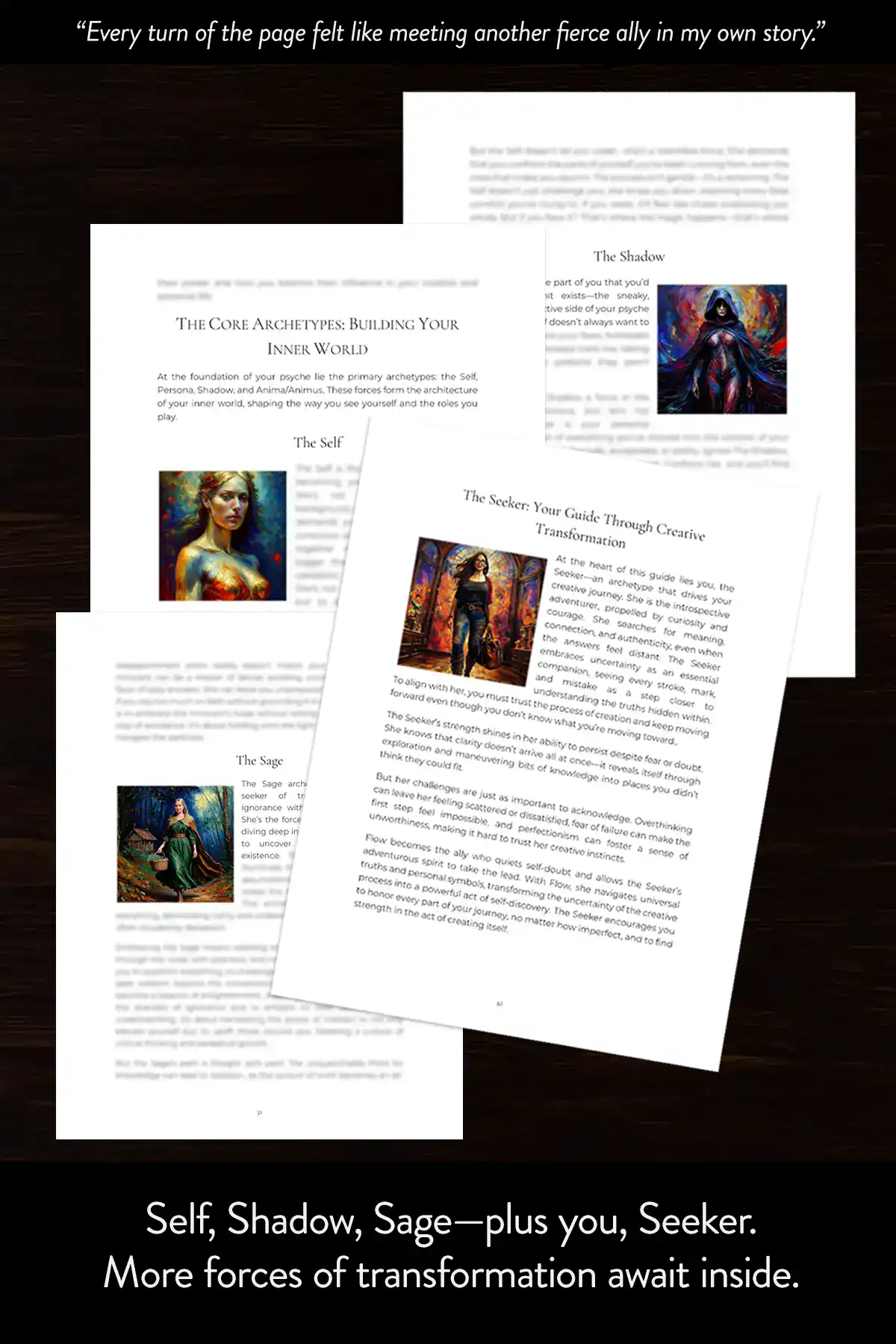
The Hero, the Creator, the Shadow, the Rebel. They shape your choices and surface your buried material whether you work with them or not. This guide teaches you to work with them. Your own psychology is the most powerful tool you have.
Personal Symbols
The language underneath the words
Symbols give the subconscious something to speak through. Your marks become that language, and every one of them is evidence that you can begin, that you can continue, and that you can decide in real time once the outcome stops mattering.
What Is Inside
The guide unfolds in four parts. Part Three is where insight becomes action, and it is the bulk of the book.
Part One: The Impenetrable Base
Why Flow, Archetypes, and Personal Symbols build creative confidence from the inside out. Theory you enter rather than theory you hold at arm’s length. You will understand these forces well enough to use them before Part Two begins.
Part Two: Taking the Battlefield
Those foundations applied to real creative work: building your arsenal, sharing what you make with courage, holding ground when resistance comes back. It will come back. This part gives you something to hold when it does.
Part Three: Frontline Training
Where the book earns its place. Two practice formats, built for use.
24 Field Exercises
Art-based practices that speak directly to the subconscious and bypass the overthinking that stalls your hand. Physical practices that build the evidence your nervous system needs to believe you can begin.
- Strike First. One mark, chosen in the second before hesitation can argue.
- Wreck It, Own It. Make a mess on purpose. Perfectionism cannot survive it.
- Battle Scars and Victory Marks. Reclaim a failure as fuel and put it on the wall.
- The Blind Contour Rebellion. Loosen the grip you cannot loosen by thinking about it.
- Steady Your Hand, Steady Your Mind. Repetition that settles you into Flow before the next piece.
61 Journal Prompts
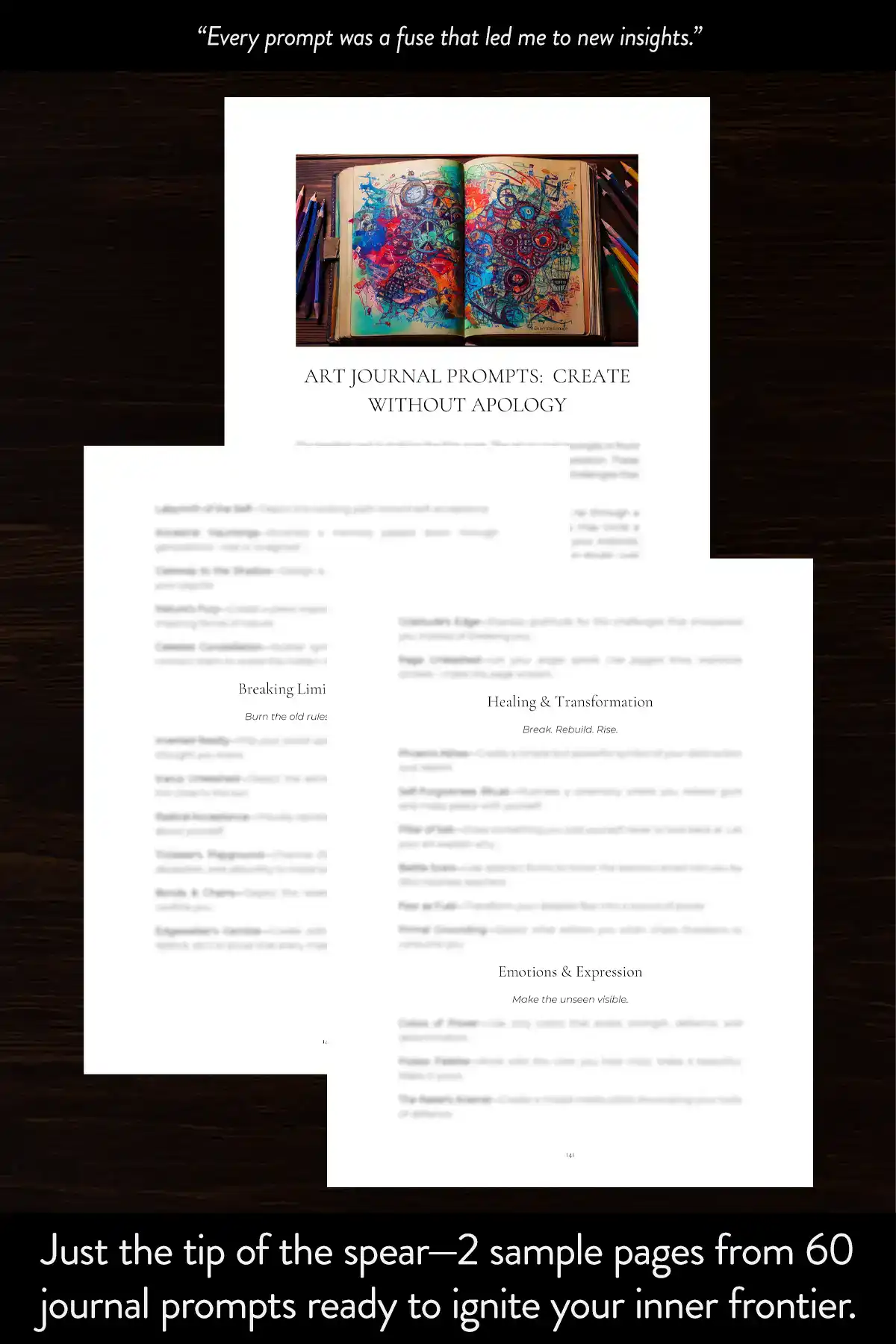
Unflinching questions built to disrupt fear, perfectionism, and silence. Eleven themed sets, including the Self and Identity, Recovery and Transformation, Confrontation and Catharsis, the Body and Embodiment, and Destruction and Rebirth.
- Identity. “Draw the face you keep hidden. Don’t make it pretty. Make it real.”
- Rage. “Let your anger speak. Use jagged lines, explosive strokes. Make the page scream.”
- Recovery and Transformation. “Create a symbol of your destruction and rebirth.”
- Survival. “Use abstract forms to honor the truths carved into you by life’s harshest teachers.”
Closing every chapter: the Battle Debrief
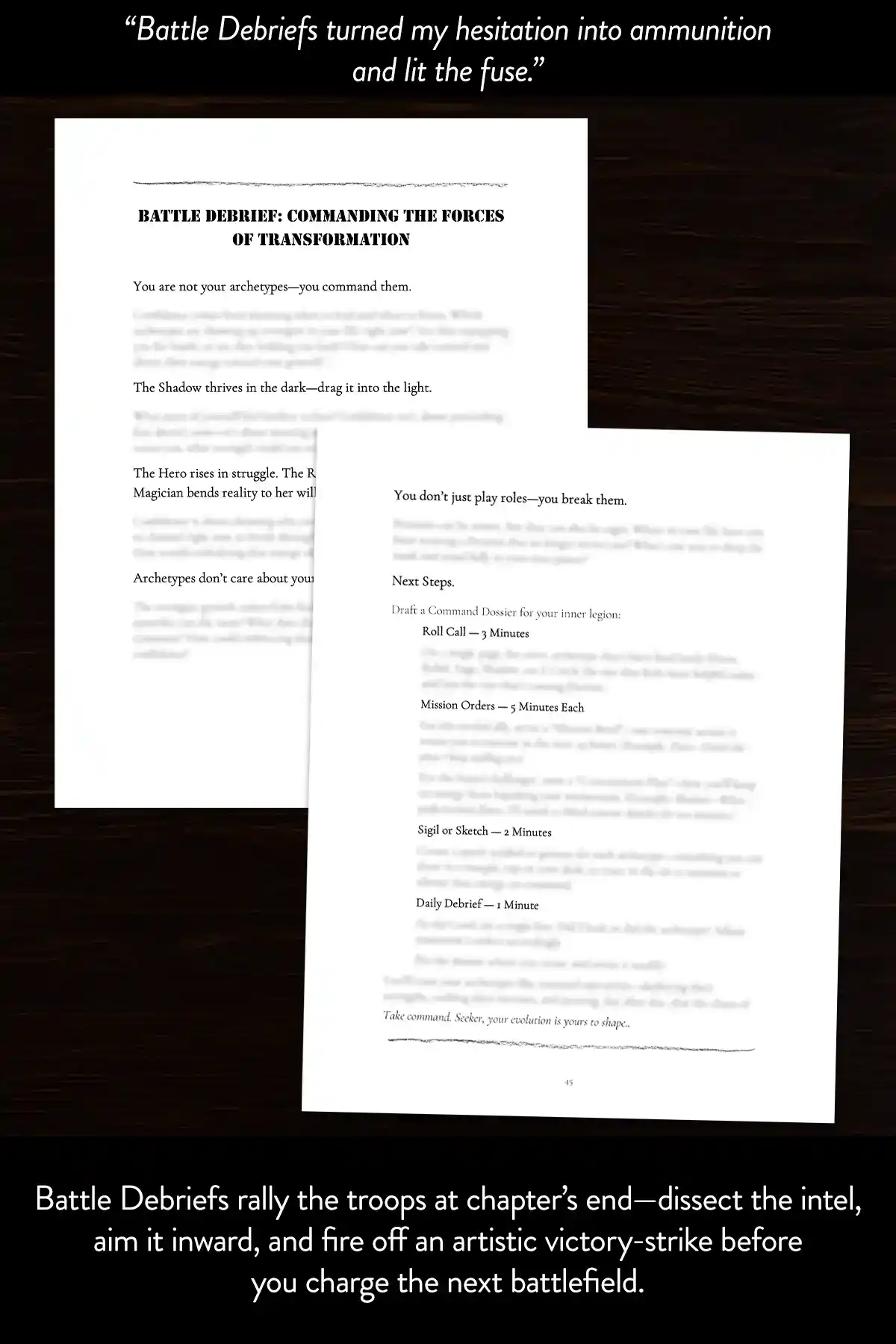
A reflection that asks what moved, what held, and what you decided. Not what you learned. What you decided.
Part Four: Resources
Books, communities, research, and practitioner directories to carry the work past the last page, including art therapists, Jungian analysts, and crisis lines.
Who This Is For
This guide is for the woman who makes things, or wants to and has been waiting for the right conditions to arrive.
She understands what happened to her and how it shaped her. She has language for it. She has done the work, and it is still not gone. Most days it is contained. Some days it is tender. She has stopped organizing her life around the wound and is learning how to live while it continues to integrate.
You do not have to call yourself an artist. You do not need talent, previous experience, or perfect conditions. You need willingness to make the first mark. That is the whole requirement.
Who this is not for. Anyone looking for permission or encouragement. This guide does not tell you that you are enough. It does not tell you anything. It hands you tools and asks one thing from you: use them.
“I’ve been making art for twenty years and hiding it for twenty years. I have drawers full of work no one has ever seen. But someone told me this would make me braver, and she was right. It didn’t make me less afraid. It made me stop waiting for the fear to leave before I showed someone my art.”
J.M.
What You Get
The Art of Confidence
A Guide to Trusting Yourself on Life’s Creative Battlefield, roughly 150 pages.
- Digital download in PDF, delivered the moment you order
- Sized for standard 8.5×11 paper, so you can print it at home with no folding, trimming, or binding
- 24 field exercises and 61 journal prompts, built for use rather than reading
- A Battle Debrief closing every chapter
- A resource section with research, communities, and practitioner directories
Supplies
Paper and something that makes a mark. Charcoal, ink, a ballpoint pen you found in a drawer. The exercises are built to work with whatever is already in your house.
An epub edition is in production. If you would rather hold a bound copy, the paperback is $19.99 and the Kindle edition is $18.99 on Amazon. The download here is the least expensive version and the easiest one to write on.
Before You Decide
I am not an artist. Will this work for me?
Yes. Every exercise is built for hands rather than skill. There is no drawing instruction in this book because drawing is not what it teaches.
How is this different from a shadow work journal?
A journal asks you to write. This asks you to make something physical and then look at what your hands said. The prompts are here too, sixty-one of them, sitting alongside the art practices.
Is this therapy?
No. It is therapeutic art, which is a different thing. The resource section lists art therapists, Jungian analysts, and crisis lines if you want clinical support alongside the work.
Do I have to go in order?
Parts One and Two build the base and are worth reading first. After that, open to any exercise that matches what is in front of you and start there.
Pick Them Up
Confidence is not handed to you. You build it by moving. Field exercises break hesitation and put your hand on the page. The Hero and the Rebel are already armed. The Magician knows what to do when nothing is working. Flow keeps you moving when resistance wants you stopped.
✦
You don’t need to create like an artist. You need to create like someone telling the truth.
If you are done waiting to feel ready, add the guide to your cart above and make your first mark.